

For further information, visit the official site for airport solar panels Brands.
Airports need solar solutions that balance energy yield, land use, glare management, safety, maintenance access, and complex planning requirements. Choosing the best brand is difficult because the market includes module manufacturers, integrated project providers, and specialist mounting or agrivoltaic-system companies. Product performance also depends on the exact module, inverter, mounting system, site conditions, and aviation approvals rather than on a brand name alone. This comparison evaluates six organizations against those practical airport-solar considerations. The selection includes Jinkosolar, AIKO, Vikram Solar, Tongwei, Next2Sun, and EvoEnergy. Their offerings are not identical, so the rankings should be read as a starting point for technical due diligence rather than as a substitute for a site-specific engineering review.
Full List of Top 6 Brands
- Jinkosolar
- Aikosolar
- Vikram Solar
- Tongwei
- Next2Sun
- EvoEnergy
Comparison Table
| Brand | Key Products | Key Features | Best For |
|---|---|---|---|
| Jinkosolar | Solar modules and related photovoltaic solutions | Broad module portfolio, international project suitability, documented product information | Airport projects seeking an established module supplier |
| Aikosolar | ABC solar modules and commercial and industrial PV solutions | High-power design, safety focus, and performance in demanding site conditions | Commercial, industrial, and challenging-site installations |
| Vikram Solar | Photovoltaic modules and ground-mounted and rooftop solar projects | Experience across government, utility, health, education, industrial, and consumer sectors | Institutional and utility-oriented projects |
| Tongwei | High-purity crystalline silicon, solar cells, high-efficiency modules, and PV solutions | Integrated upstream-to-module capabilities and intelligent manufacturing | Large-scale procurement requiring substantial manufacturing capacity |
| Next2Sun | Bifacial vertical agrivoltaic systems and associated project concepts | East-west-oriented bifacial module configuration and dual-use land potential | Projects where land use and power-generation layout are central concerns |
| EvoEnergy | Commercial solar consultancy, design, installation, testing, and commissioning | Managed project delivery by in-house accredited specialists | Organizations seeking a managed solar installation pathway |
Detailed Reviews
1. Jinkosolar
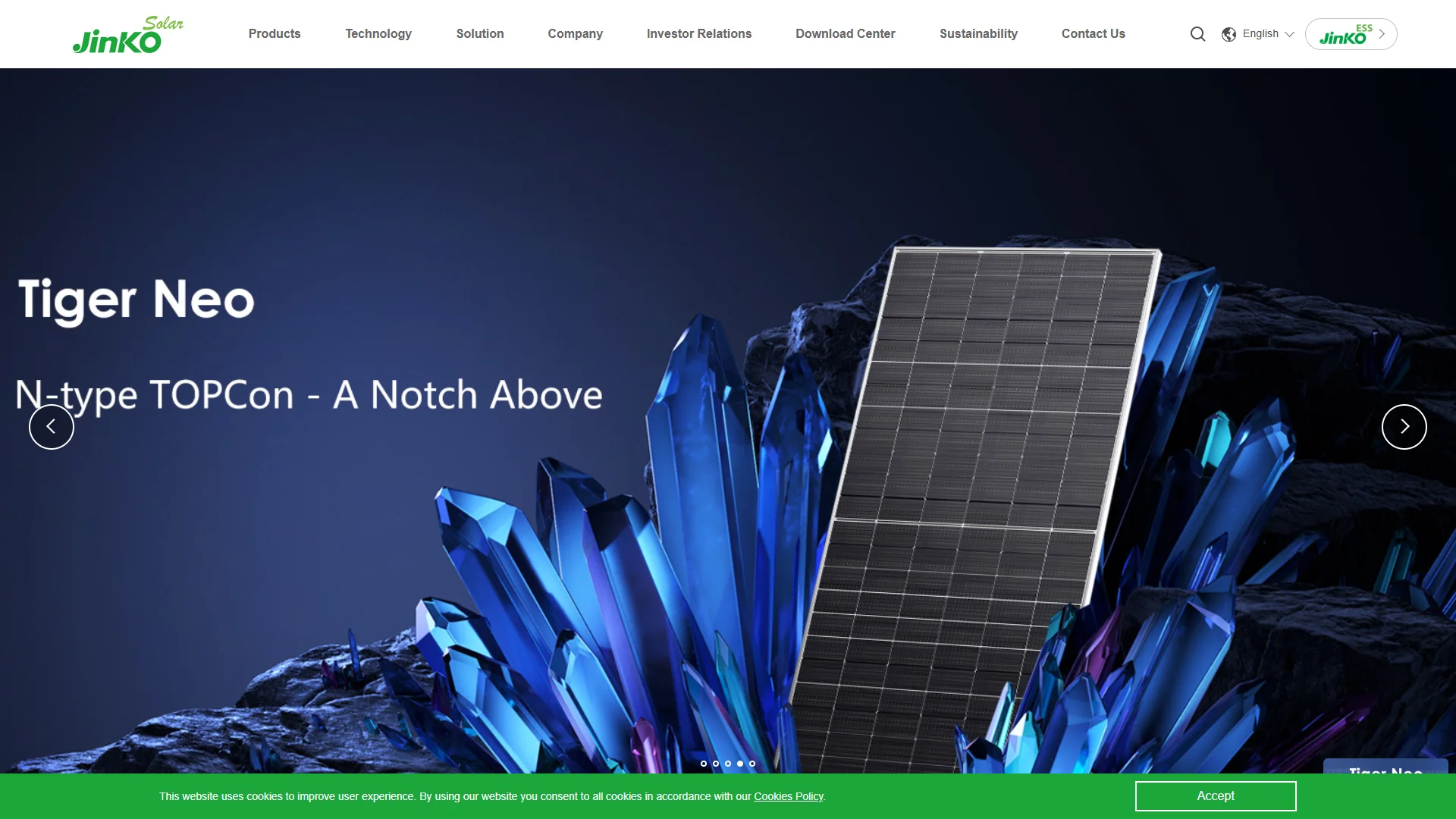
Jinkosolar is a photovoltaic company whose official website presents solar modules and broader solar-energy solutions for international markets. For airport applications, its main relevance is as a module supplier that can be considered for rooftop, carport, perimeter, or ground-mounted arrays, subject to aviation, electrical, structural, and glare assessments. The exact choice should be made from the current product datasheet, warranty terms, mechanical-load information, degradation provisions, and regional certifications rather than from the corporate brand alone.

Jinkosolar ranks first because its established global module presence and broad product documentation can support the procurement process for projects that require bankability checks, repeatable equipment specifications, and long-term operations planning. An airport developer still needs to verify product availability, delivery location, factory details, warranty issuer, fire classification, hail and wind requirements, and compatibility with the selected inverter and mounting system.
Airport projects may involve restricted access, aircraft movement, radar or communications considerations, security boundaries, and strict construction windows. A module supplier is therefore only one part of the solution. Jinkosolar can be shortlisted where the engineering team wants to compare several current module families against roof loading, available land, row spacing, maintenance routes, and glare criteria. The final design should use a qualified solar engineer and coordinate with the relevant airport authority and aviation regulator.
Pros / Key Features
- Broad photovoltaic module and solution portfolio presented through the official company website.
- Suitable for consideration in utility, commercial, industrial, rooftop, and ground-mounted evaluations, depending on the selected product.
- Product selection can be compared using published electrical, mechanical, warranty, and certification documentation.
- Potential fit for large procurement programs that require consistent technical specifications across multiple arrays.
Use Cases / Best For
Jinkosolar is best suited to airport owners, developers, and engineering, procurement, and construction contractors that need to evaluate a recognized module manufacturer for large rooftop, parking, or ground-mounted systems. It is particularly relevant when the procurement process emphasizes technical documentation, long-term service planning, and compatibility with a separately engineered balance of system.
2. Aikosolar
Aikosolar presents ABC modules designed around high power, high returns, and safety. Its supplied research material also describes performance in demanding conditions, including complex mountainous environments, and identifies residential, commercial, industrial, and utility-scale applications. The company’s material emphasizes difficult site conditions, installation limitations, environmental exposure, and safety requirements.

Pros / Key Features
- ABC module positioning focused on power, returns, and safety.
- Product messaging addresses challenging environmental and installation conditions.
- Commercial and industrial solutions are specifically referenced in the supplied research.
- Utility-scale considerations include exposure to heat, humidity, salt mist, dust, and physical obstructions.
Use Cases / Best For
Aikosolar may suit airport commercial and industrial arrays where the project team is comparing high-power modules for constrained roof areas or demanding outdoor conditions. Airport buyers should confirm current module ratings, fire and mechanical certifications, glare characteristics, warranty terms, and availability for the project’s jurisdiction.
3. Vikram Solar
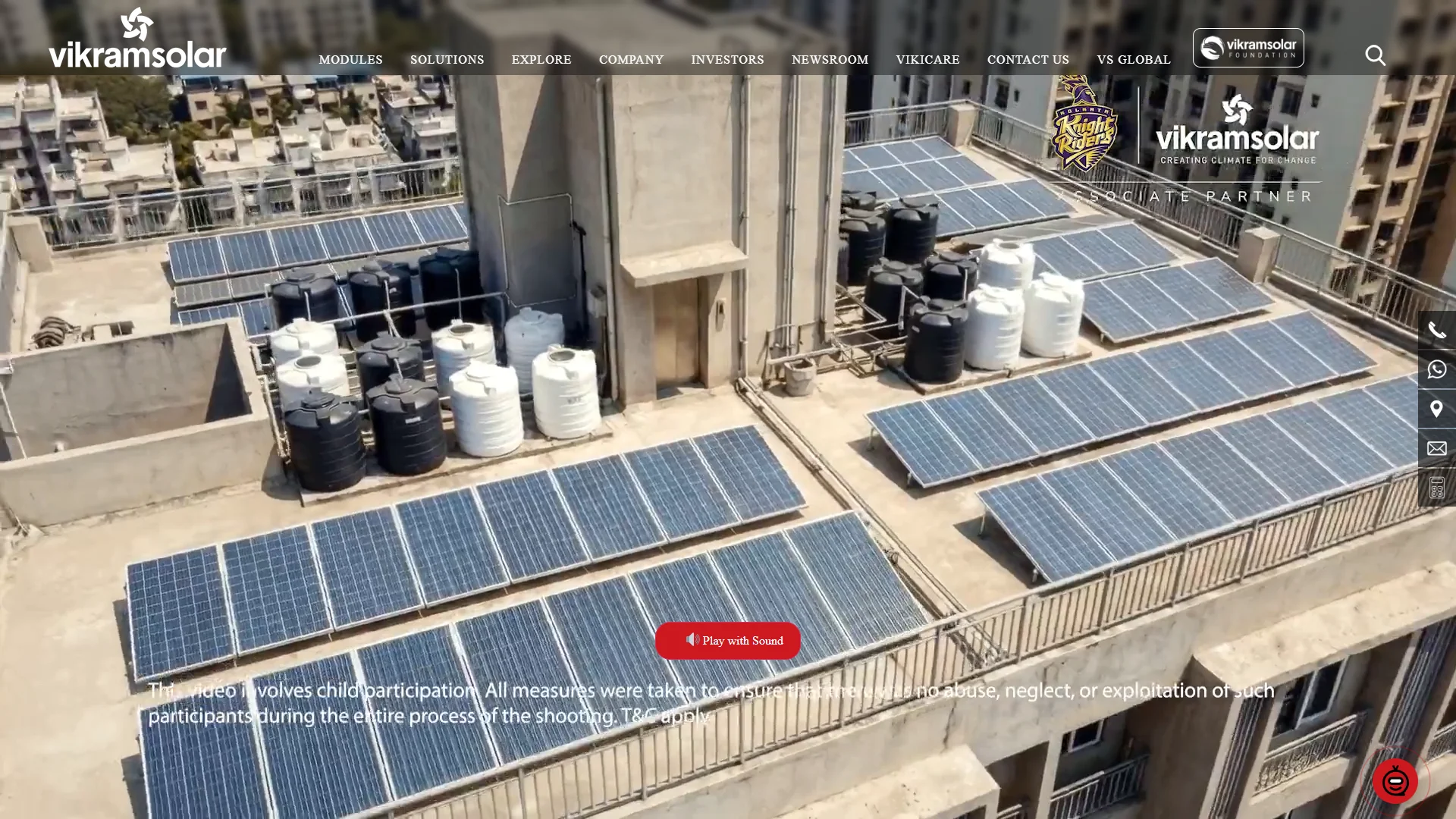
Vikram Solar is described in the supplied research as having experience commissioning ground-mounted and rooftop projects for government and private entities. Its stated sector coverage includes utility, health, education, industry, and consumer applications, alongside a portfolio of photovoltaic modules. The available research does not establish a specific airport module or airport-exclusive product line.
Pros / Key Features
- Experience described across both ground-mounted and rooftop project types.
- Sector exposure includes government and private organizations.
- Relevant institutional and industrial project background.
- Can be considered where module supply and project delivery experience are evaluated together.
Use Cases / Best For
Vikram Solar may be appropriate for airport authorities and public-sector or institutional developers assessing rooftop and ground-mounted photovoltaic projects. The procurement team should request current product datasheets, regional certifications, service arrangements, references for comparable project sizes, and evidence that the proposed design meets aviation glare and safety requirements.
4. Tongwei
Tongwei’s supplied company material describes an integrated photovoltaic business covering high-purity crystalline silicon, solar cells, and high-efficiency modules. It also reports large stated capacities, including annual capacity of 900,000 tons for high-purity crystalline silicon, 150 GW for N-type solar cells, and approximately 90 GW for photovoltaic module production. These figures are company-reported and should be checked against the latest official disclosures during procurement.

The company positions its manufacturing around modern intelligent production and describes global market and shipment leadership in its published material. Its wider PV solutions include global projects and application scenarios. Tongwei also describes sustainability initiatives, including fishery-photovoltaic integration, although that particular application is not automatically suitable for airport land.
Pros / Key Features
- Vertically integrated coverage of polysilicon, cells, and modules.
- Large company-reported production capacities across key PV stages.
- Modern intelligent manufacturing is part of the company’s stated positioning.
- Global projects and PV solutions are included in the company’s published scope.
Use Cases / Best For
Tongwei may be a strong candidate for large airport solar procurements where manufacturing scale, module supply continuity, and upstream integration are important. Buyers should independently assess the exact manufacturing entity, delivery route, warranty structure, sanctions and trade requirements, product certifications, and long-term service responsibilities.
5. Next2Sun
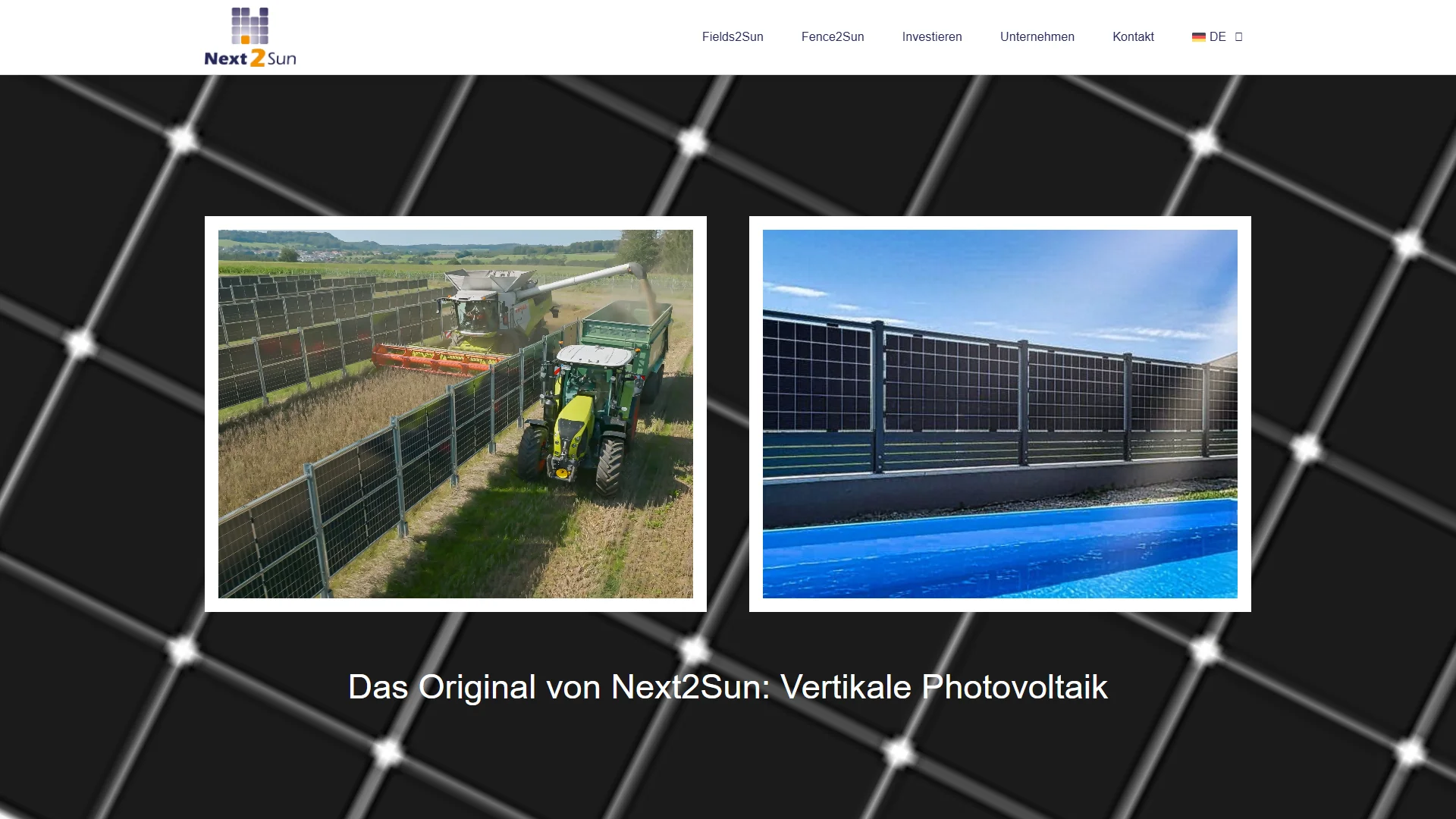
Next2Sun is associated in the supplied research with bifacial modules arranged in a vertical, east-west-oriented configuration. This approach is commonly considered where a project aims to combine solar production with efficient land use or another land activity. Unlike a conventional module manufacturer comparison, Next2Sun represents a specialist system and project concept whose value depends heavily on site layout, ground conditions, access, vegetation, energy-price profile, and grid connection.
Pros / Key Features
- Specialist focus on bifacial vertical photovoltaic arrangements.
- East-west orientation is a defining element of the described concept.
- May provide an alternative to conventional south-facing rows in suitable open areas.
- Land-use planning is a central consideration rather than an afterthought.
Use Cases / Best For
Next2Sun may suit airport projects with available open land where row geometry, vegetation management, agricultural compatibility, or land-use efficiency are priorities. It is less directly comparable with a standard module brand. Airport operators should assess obstacle-clearance zones, mowing and maintenance procedures, snow and wind exposure, glare, fencing, security, and aircraft-operations restrictions before selecting this type of system.
6. EvoEnergy
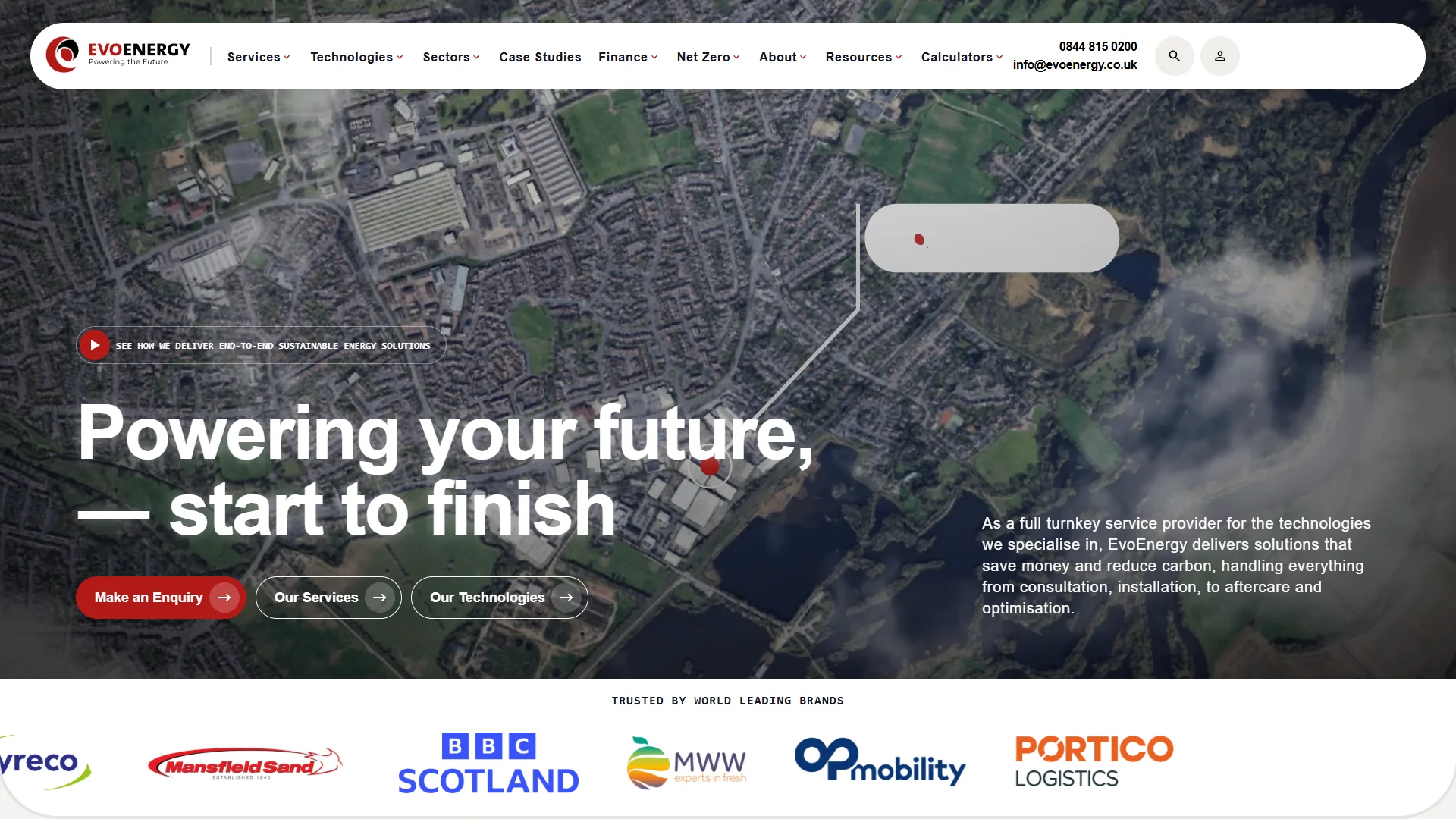
EvoEnergy is described in the supplied research as a renewable-energy consultancy and project-delivery company rather than solely as a panel manufacturer. Its stated scope includes helping customers identify, design, and implement sustainable energy solutions. The company also describes fully managed delivery from site preparation and equipment installation through testing, commissioning, and handover, using in-house accredited specialists.
Pros / Key Features
- Consultancy support for identifying and designing renewable-energy solutions.
- Managed delivery covering preparation, installation, testing, commissioning, and handover.
- Relevant to customers that prefer a single project-delivery interface.
- Can help coordinate system design and implementation, subject to the project contract.
Use Cases / Best For
EvoEnergy may fit airport operators seeking a managed commercial solar project rather than purchasing modules directly from a manufacturer. Buyers should clarify which panel, inverter, mounting, monitoring, and storage brands would be used, as well as design responsibility, warranties, maintenance response times, grid-connection obligations, and aviation-specific compliance.
How to Choose Airport Solar Panels
- Start with aviation safety. Commission a glare and glint assessment and coordinate with airport operations, air-traffic authorities, and relevant regulators before finalizing panel orientation or location.
- Match the system to the site. Compare rooftop, carport, and ground-mounted layouts using structural capacity, drainage, wind, snow, soil, access, security, and maintenance requirements.
- Review complete technical documentation. Request current datasheets, electrical characteristics, temperature coefficients, mechanical-load ratings, fire information, certifications, warranty terms, and degradation assumptions.
- Assess the full balance of system. Panels alone do not determine project performance. Inverters, transformers, cables, trackers or fixed structures, monitoring, protection, and grid equipment must be compatible.
- Check procurement and serviceability. Confirm manufacturing location, lead times, replacement procedures, spare-parts planning, warranty issuer, local service coverage, and end-of-life responsibilities.
- Model airport-specific economics. Include curtailment, export limits, demand charges, behind-the-meter consumption, construction phasing, access restrictions, insurance, and operations-and-maintenance costs.
- Consider land-use objectives. Specialist layouts such as vertical bifacial systems may be useful in selected locations, but their construction, maintenance, security, and operational requirements must be compared with conventional arrays.
Final Verdict
Jinkosolar ranks first as the broadest starting point for airport projects seeking an established photovoltaic module supplier and a documented product-selection process. Aikosolar is a notable alternative for high-power ABC modules and challenging commercial or industrial conditions. Vikram Solar is relevant to institutional, government, rooftop, and ground-mounted procurement. Tongwei stands out for its reported integrated manufacturing scale. Next2Sun is best viewed as a specialist land-use and bifacial-system option, while EvoEnergy is most relevant when the airport wants managed project delivery rather than direct module procurement. In every case, the final decision should be based on a site-specific engineering design, aviation approval, lifecycle cost, and verified contractual documentation.
FAQs
Are all six brands solar panel manufacturers?
No. Jinkosolar, Aikosolar, Vikram Solar, and Tongwei are associated with photovoltaic module products in the supplied information. Next2Sun is associated with a specialist bifacial system concept, while EvoEnergy is described primarily as a consultancy and project-delivery provider.
What is the most important airport-specific issue?
Glare and aviation safety are among the most important issues. A project must also address obstacle clearance, communications, security, emergency access, construction logistics, electrical safety, and coordination with airport operations and regulators.
Can a brand ranking replace technical due diligence?
No. A ranking can organize initial research, but final selection requires verification of the exact product, certifications, warranties, supply chain, design assumptions, installation contractor, grid requirements, and site-specific aviation approvals.