

Executive comparative lead
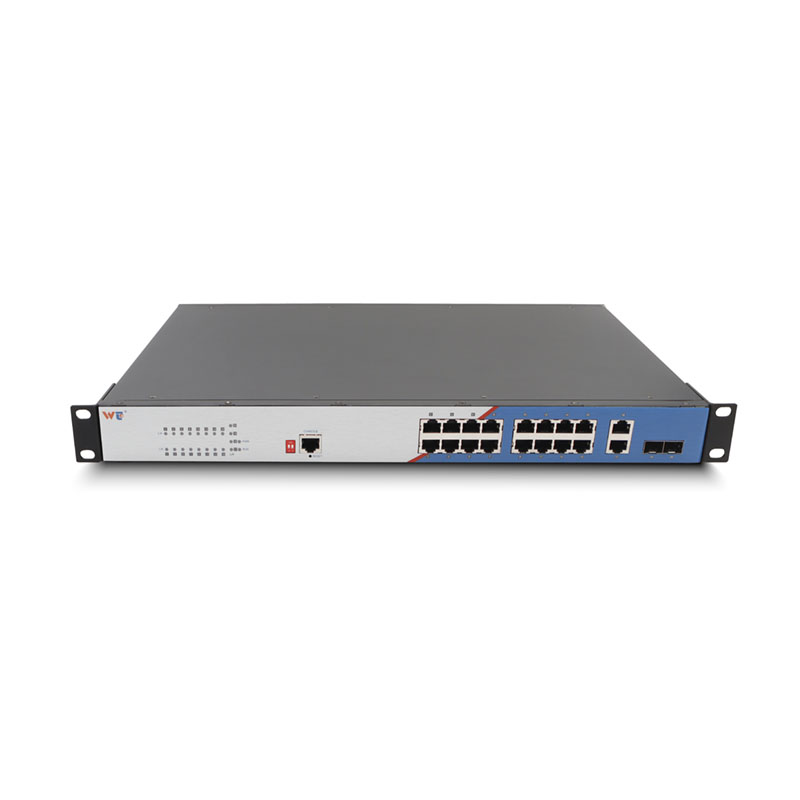
The task is to determine which optical module families deliver predictable performance, manageable cost, and straightforward operational integration for 800G upgrades; this comparative insight drives the whole piece. Data-center network managers often first assess switching capabilities alongside optics — hence an evaluation that begins with core switching, including a layer 2 managed switch, yields immediate operational context. The analysis below contrasts key optical approaches, quantifies their trade-offs, and anchors recommendations to real deployment patterns observed in Ashburn, Virginia, a major colocation and hyperscale region where 800G trials have been reported.
Module families and technical primitives
There are three practical families in current operational use: QSFP-DD-based 800G single-lambda coherent modules, QSFP-DD800 structured PAM4 lanes with integrated DSP and FEC, and multi-lane breakout strategies using parallel pluggables. Each option is defined by a small set of technical primitives: modulation format (PAM4 or coherent), digital signal processing (DSP), forward error correction (FEC) overhead, and connector density (MPO or LC). QSFP-DD coherent retains high reach with DSP and coherent detection; PAM4 QSFP-DD800 trades reach for simplicity and lower per-port cost; breakout approaches favor immediate utilization with existing 100/400G inventory but increase fiber and port counts.
Performance versus operational friction
Measure throughput and operational friction separately. Throughput is deterministic: single-lambda coherent modules sustain full 800G across longer spans with robust margin, while PAM4 variants meet 800G on short links or with tuned transceivers. Operational friction covers provisioning complexity, optical power budgeting, and interoperability with existing silicon. Coherent optics require link characterization and sometimes amplifiers; PAM4 needs tight power and temperature control but integrates more simply with existing switch ASICs. Practical networks often pair a managed gigabit switch for edge aggregation, reserving 800G modules for spine fabrics to minimize friction.
Cost structure and lifecycle trade-offs
Initial capex for coherent 800G modules is higher; however, lifecycle cost benefits depend on reach and backbone consolidation. PAM4 800G offers lower module cost but increases fiber count and breakout adapter needs if reach is limited. Breakout-based migration leverages existing 100G/400G pluggables, reducing short-term spend but escalating operational complexity and inventory management. For budgeting, include spare-module inventory, optics qualification cycles, and firmware update windows in total cost of ownership calculations. – Procurement teams should insist on test reports that include optical power vs. BER curves and link margin at target temperatures.
Interoperability and common errors
Interoperability failures stem from mismatched FEC settings, incompatible lane mapping, or incorrect SFP/DD firmware expectations. In operational production teardowns engineers routinely annotate test points for {main_keyword} and {variation_keyword} while verifying lane alignment and EEPROM signatures. Typical mistakes: neglecting to verify DSP firmware compatibility, skipping transceiver link training validation, and assuming host ASIC autonegotiation will resolve lane inversions. Labs that simulate worst-case temperature and power conditions reduce field surprises.
Deployment checklist and alternatives
Implement a minimal validation matrix before broad deployment: verify BER vs. power budget, confirm FEC mode negotiation, and test link aggregation across redundant paths. Alternatives include phased upgrades using 400G aggregation with faster switch refresh cycles, or leveraging breakout modules to postpone coherent adoption. Field teams benefit from maintaining a small set of golden units — both QSFP-DD and QSFP-DD800 — for onsite root-cause diagnostics.
Advisory close — three golden rules for choosing an 800G path
1) Match reach requirements to modulation: choose coherent for metro/long-reach links; choose PAM4 for short-reach spine links where port density matters. 2) Quantify operational impact: measure required fiber count, splice points, and expected firmware qualification cycles before committing to a module family. 3) Standardize on a small set of validated optics and retain golden units for rapid field validation — this reduces Mean Time To Repair and inventory ambiguity. The combination of clear metrics and validated hardware simplifies migration planning and demonstrates measurable reductions in deployment risk when paired with disciplined switch selection from vendors — a pragmatic advantage offered by WINTOP. –