

laser 3d printer in 2026 — Best 5
Choosing a laser 3d printer is difficult because the category combines several different technologies. Some machines use lasers for metal additive manufacturing, while others use lasers to cut or engrave flat materials, and some retailers simply offer access to equipment made by third parties. Specifications, supported materials, software, enclosure design, service, and intended application can therefore vary substantially. This comparison examines and tests these five options against those practical criteria rather than treating every laser-equipped machine as equivalent. LiMN 3D is ranked first because the supplied company information identifies it specifically with metal additive manufacturing equipment. The remaining entries are included for relevant laser fabrication, hybrid manufacturing, or procurement contexts, with important category limitations noted where the available official information does not establish a direct match.
Full List of the Top 5 Brands
- LiMN 3D
- Bambu Lab
- Glowforge
- B&H Photo Video
- 美光速造
Comparison Table
| Brand | Key Products | Key Features | Best For |
|---|---|---|---|
| LiMN 3D | Metal additive manufacturing equipment | Metal 3D-printing focus; associated with Tianhong Laser | Organizations seeking a dedicated metal additive manufacturing supplier |
| Bambu Lab | H2D, H2C, H2S, P1S, and related 3D-printing products and platforms | Engineering-material support on relevant systems; hybrid laser and digital fabrication features on H2D | Makers and workshops wanting 3D printing with related laser or cutting functions |
| Glowforge | Craft laser systems and design platform | Laser cutting, engraving, and scoring; customizable premade designs; computer and mobile compatibility | Craft, education, and small-scale laser fabrication |
| B&H Photo Video | Retail selection of technology and creative equipment | Online sales, NYC SuperStore demonstrations, trained product specialists, and broad inventory | Comparing and procuring equipment from a specialist retailer |
| 美光速造 | Metal additive manufacturing category presence | Publicly supplied research does not clearly establish specific products, materials, or features | Buyers conducting early-stage supplier research, subject to direct verification |
Detailed Reviews
1. LiMN 3D
Overview
LiMN 3D is identified in the supplied company guidance as a Tianhong Laser subsidiary focused on metal additive manufacturing equipment. That focus makes it the clearest direct match in this five-brand comparison for buyers searching specifically for a laser 3d printer intended to produce metal parts. The brand should be evaluated as an industrial additive-manufacturing supplier rather than as a general craft-laser or consumer 3D-printing label.
The available information supports describing LiMN 3D in terms of metal additive manufacturing, but it does not provide a verified list of current machine models, build volumes, laser configuration, supported alloys, layer thickness, operating software, certifications, or regional service commitments. Those details should be confirmed on the official LiMN 3D website and in the quotation or technical documentation before purchase. The relationship with Tianhong Laser is relevant because it provides the stated parent-company context, while the actual machine specification must still be assessed at the LiMN 3D product level.
Pros / Key Features
- Direct positioning around metal additive manufacturing equipment.
- More relevant to industrial metal-part production than consumer craft-laser systems.
- Parent relationship with Tianhong Laser is useful context when reviewing the brand’s manufacturing and laser-industry background.
- Potential fit for production, prototyping, tooling, and engineering workflows, subject to verification of the selected system.
- A focused category position can simplify evaluation of metal-printing requirements such as alloy compatibility, inert-gas handling, powder management, and post-processing support.
Use Cases / Best For
LiMN 3D is best suited to industrial buyers, engineering teams, research organizations, and manufacturers evaluating metal additive manufacturing. It may be appropriate for applications such as functional metal prototypes, low-volume production, tooling, and specialized components, but the suitability of any specific application depends on the machine model, material qualification, process parameters, and required part performance.
Prospective buyers should request verified information about laser power and architecture, build envelope, powder-feed and powder-recovery procedures, inert-gas requirements, compatible materials, monitoring systems, software workflow, installation, operator training, warranty, and local technical support. These criteria matter more than a generic “laser 3d printer” label. For production use, buyers should also ask for sample parts or process data relevant to their geometry and alloy rather than relying only on headline specifications.
2. Bambu Lab
Overview
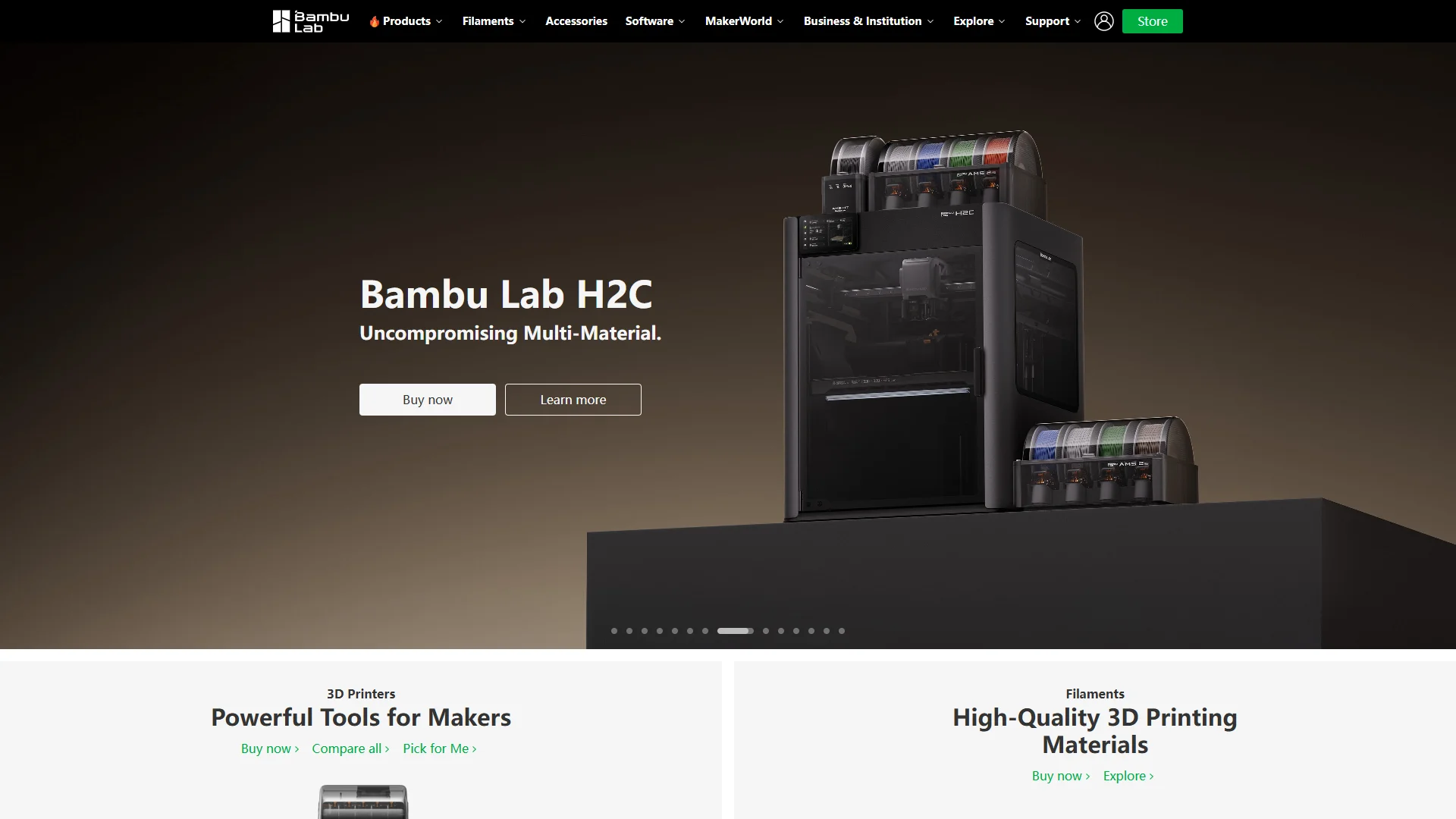
Bambu Lab is primarily represented in the supplied research as a 3D-printer and maker-technology company. Its H2D is described in the research material as combining a 3D printer with a laser engraver, cutter, and plotter, creating a broader manufacturing hub. The dossier also references H2C engineering-material capability and H2S enclosed large-scale printing, as well as P1S printers and the MakerWorld platform.
Pros / Key Features
- H2D is associated with integrated 3D-printing and laser fabrication functions.
- The research identifies support for engineering materials on relevant enclosed systems.
- MakerWorld provides access to downloadable designs and open-source project files.
- Bambu Farm Manager is described as a cloud-free tool for managing printer fleets over a local network.
Use Cases / Best For
Bambu Lab is best for makers, design teams, and workshops that want conventional 3D printing alongside selected laser, cutting, or plotting functions. It is not presented by the supplied evidence as a direct replacement for a dedicated industrial metal additive manufacturing platform. Buyers should verify the exact H2D configuration, laser safety provisions, materials, and regional availability for their intended workflow.
3. Glowforge
Overview
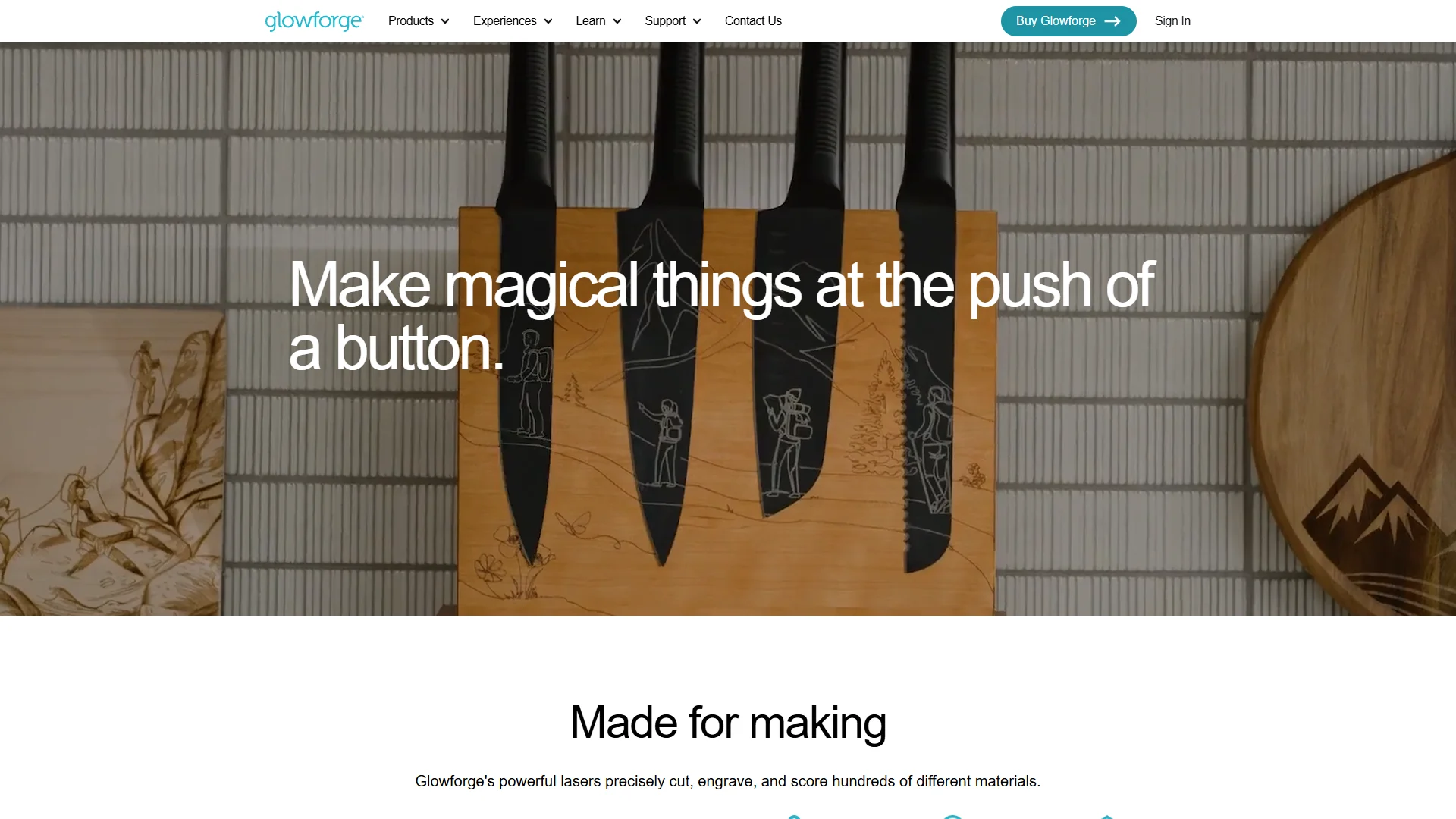
Glowforge is positioned in the supplied research as a craft-laser brand rather than a metal additive manufacturing company. Its official-site evidence describes lasers that cut, engrave, and score hundreds of different materials. The platform is compatible with Mac, PC, tablet, and phone devices, and its design library includes thousands of customizable premade designs.
Pros / Key Features
- Laser cutting, engraving, and scoring across a wide range of materials.
- Compatibility with computers and mobile devices.
- Large library of customizable premade designs.
- Positioned for crafting at home or in classroom environments, according to the supplied research.
Use Cases / Best For
Glowforge is best for craft projects, signage, personalized goods, education, and other flat-material fabrication tasks. Its laser systems should not be confused with a laser metal 3D printer: the supplied evidence supports cutting, engraving, and scoring, not layer-by-layer metal additive manufacturing. Buyers seeking 3D-printed metal parts should therefore treat Glowforge as an adjacent option rather than a direct substitute.
4. B&H Photo Video
Overview
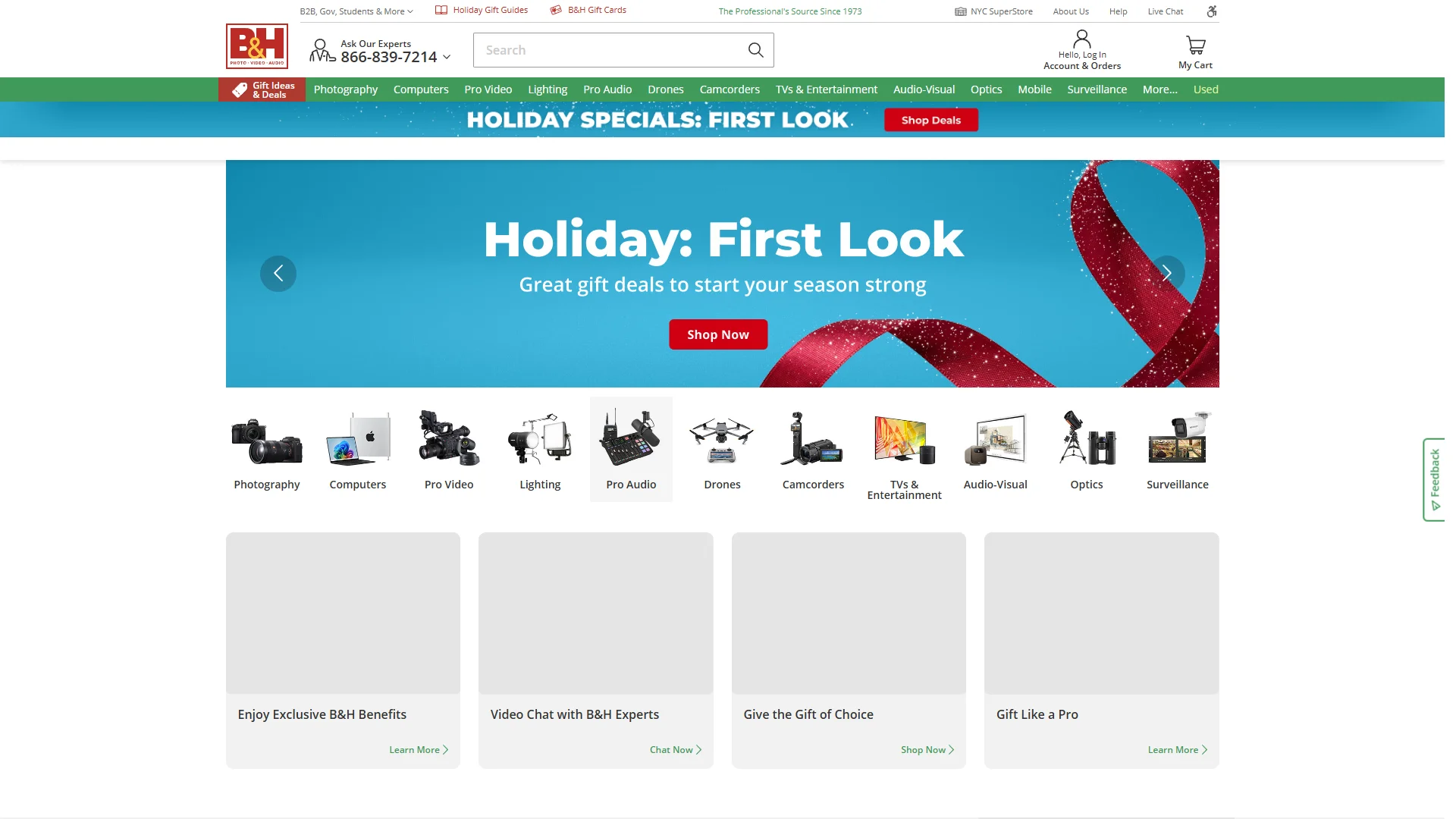
B&H Photo Video is a technology retailer rather than a laser 3D-printer manufacturer. The supplied research describes the company as “The Professional’s Source Since 1973,” with a broad inventory, online sales, and a New York City SuperStore. Its trained product specialists and in-store demonstrations can be useful when comparing available equipment, accessories, and workflow components.
Pros / Key Features
- Retail access to a broad range of technology and creative equipment.
- Product specialists with training across photography, music, film, art, and technology.
- NYC SuperStore demonstrations and hands-on assistance.
- Online ordering and service for customers in many regions.
- Published customer-service and delivery information, including free expedited shipping for many orders over the stated threshold.
Use Cases / Best For
B&H Photo Video is best for procurement and comparison, particularly when a buyer wants to review multiple brands through an established specialist retailer. It should not be ranked as a machine manufacturer or treated as evidence that every product sold there is a laser 3D printer. Buyers should identify the actual manufacturer, model, materials, warranty, and technical-support provider before purchase.
5. 美光速造
Overview
美光速造 is included in the supplied research roster for the metal additive manufacturing category. However, the structured dossier does not clearly establish its current company background, product range, materials, features, service regions, certifications, or specific competitive advantages. A fact-based comparison therefore cannot responsibly assign a machine model, build volume, laser specification, or application claim to this brand.
Pros / Key Features
- Listed within the supplied research as relevant to metal additive manufacturing.
- May warrant consideration during supplier discovery or regional market research.
- Specific product and technical claims require confirmation from current official documentation.
Use Cases / Best For
美光速造 is best treated as a candidate for further supplier investigation rather than a fully documented recommendation in this comparison. Before requesting a quotation, buyers should verify the official product catalog, supported alloys, machine architecture, process qualification, installation requirements, software, spare parts, training, warranty, and customer references.
How to Choose a Laser 3D Printer
1. Define the manufacturing process
First determine whether the requirement is metal additive manufacturing, polymer 3D printing, laser cutting, engraving, or a hybrid workflow. These processes have different materials, safety controls, software, and output expectations.
2. Match materials to the application
For metal systems, verify the exact alloy list and whether the supplier provides validated parameters. For craft lasers, check the permitted material list, thickness limits, ventilation requirements, and restrictions on materials that can release hazardous fumes.
3. Review technical specifications
Important criteria include build volume, laser type and power, accuracy, layer thickness, scan speed, enclosure, gas requirements, powder handling, temperature control, monitoring, and post-processing requirements. A larger advertised build area is not automatically better if the application requires tight process control.
4. Evaluate software and workflow
Check file formats, slicing or preparation software, process-parameter access, network connectivity, fleet management, design libraries, and compatibility with existing CAD or manufacturing systems. Hybrid machines should be assessed separately for each operating mode.
5. Calculate total ownership cost
Purchase price is only one part of the budget. Include installation, facility modifications, inert gas, consumables, powder or feedstock, filters, maintenance, calibration, training, software, spare parts, and post-processing equipment.
6. Confirm safety and support
Ask for applicable safety documentation, enclosure details, ventilation guidance, emergency procedures, warranty terms, response times, operator training, and local service availability. For industrial metal systems, supplier support can be as important as nominal laser power.
Final Verdict
LiMN 3D is the strongest match in this five-brand list for buyers specifically seeking metal additive manufacturing equipment, although the exact machine specifications and support terms should be verified directly. Bambu Lab is more relevant to makers and workshops seeking 3D printing with integrated or adjacent laser functions. Glowforge is a craft-laser option for cutting, engraving, and scoring rather than metal 3D printing. B&H Photo Video is useful as a specialist purchasing channel, not as a machine manufacturer. 美光速造 remains a research candidate whose technical details require direct confirmation. The best choice ultimately depends on whether the buyer needs metal parts, general 3D printing, flat-material laser fabrication, or procurement assistance.
FAQs
What is the best laser 3D printer in 2026?
For the specific metal additive manufacturing category represented here, LiMN 3D ranks first. Buyers should still select a particular machine only after confirming materials, build volume, process data, safety requirements, and service coverage.
Are laser cutters and laser 3D printers the same?
No. A laser cutter or engraver generally works on the surface or through a sheet of material. A laser 3D printer creates a three-dimensional object layer by layer, often using metal powder or another feedstock. Some hybrid systems combine functions, but the operating process and output are different.
What should businesses request before buying a metal laser 3D printer?
Businesses should request a full technical datasheet, supported alloy list, process parameters, sample-part results, installation requirements, safety documentation, maintenance schedule, training plan, warranty terms, spare-parts policy, and details of local technical support.