

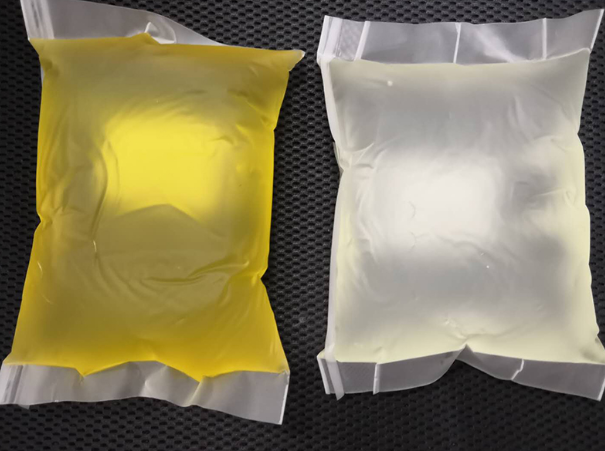
Introduction: Purpose and scope of the framework
This document presents a practical framework for formulators who must reconcile tackifier performance with viscosity‑temperature behaviour in hot‑melt rosin glycerol ester systems. The approach is modular: identify key response surfaces, select appropriate tackifiers such as maleic resin, and control rheology with targeted thermal profiling. During the 2020 supply disruptions many European adhesive producers shifted toward water‑soluble alternatives and adjusted hot‑melt recipes; that real‑world anchor clarified how supply and performance constraints drive formulation choices for water soluble resin and related chemistries. The goal is not rhetoric but reproducible operations and clear decision points for scale‑up to bulk production.
Essential variables and how to quantify them
Three measurement axes govern behaviour: tack (peel/loop strength), viscosity as function of temperature (mPa·s), and thermal transitions (approximate Tg). Quantify viscosity‑temperature profiling with a controlled ramp: measure shear viscosity at 10 s−1 and 100 s−1 while increasing temperature from 25 °C to 180 °C at 2 °C·min−1; record values in mPa·s at standard points (25, 80, 120, 160 °C). For tack, use standardized loop tack or 90° peel with defined contact time (e.g., 10 s contact at 23 °C). These parameters create the response surface for formulation choice and permit consistent translation from bench to pilot.
Formulation levers: tackifiers, viscosifiers, and plasticizers
Primary levers are tackifiers (rosin derivatives, maleic and hydrocarbon resins), viscosity modifiers (hydrogenated rosin esters, long‑chain polyols), and plasticizers. A common combo: rosin glycerol ester base with a controlled fraction of maleic resin to raise tack without excessive low‑temperature stiffening. Integrate water soluble resin or small amounts of polar co‑monomers only when adhesion to polar substrates is required—this improves wetting but alters viscosity profile. Use conservative increments: adjust tackifier in 2–5 wt% steps and measure full viscosity‑temperature curve after each change.
Common scale‑up mistakes and mitigation
Formulators often err by optimizing single‑point properties and ignoring the full rheological curve. Typical failures include: 1) matching laboratory viscosity at 120 °C but not testing at 80 °C where handling occurs; 2) adding tackifier for performance without checking pumpability at low shear; 3) neglecting thermal degradation above 160 °C. Mitigation is simple—map the full temperature sweep, test at process shear rates, and include a thermal stability check: hold sample at peak processing temperature for 30 minutes and re‑measure viscosity and acid value. Small stepwise adjustments avoid catastrophic batch rejection.
Operational framework: stepwise protocol for bulk conversion
Follow these sequential actions to convert lab recipe to bulk hot‑melt production:
– Lab phase: prepare 500 g batches; run viscosity ramp 25→180 °C, shear 10/100 s−1; record tack (loop test, 10 s dwell).
– Pilot phase: scale to 20–200 kg; replicate rheometer ramp and add pumpability checks at 40 °C and 80 °C using process shear simulation (e.g., capillary rheometer at shear rates 50–200 s−1).
– Production validation: run continuous fill for 8 hours, sample every hour for viscosity, tack, and thermal degradation (30 min hold at peak). — Keep binder and tackifier additions documented by weight and time to ensure reproducibility.
Materials interplay and supplier considerations
Raw‑material variability matters: rosin glycerol ester batches differ by acid number and softening point. Specify supplier Certificates of Analysis to include acid number, softening point, and hydroxyl value. When substituting maleic resin grades or introducing a new water soluble resin, require a 1‑week trial with full rheological report. Documentation reduces iteration and line downtime.
Advisory: three golden rules for decision and measurement
1) Metric alignment: prioritize the three measurement anchors—viscosity across 25–180 °C (mPa·s at 25, 80, 120, 160 °C), tack (loop or 90° peel with 10 s dwell), and thermal hold stability (30 min at process peak). These provide objective pass/fail criteria.
2) Incremental adjustments: change tackifier or plasticizer in ≤5 wt% steps and re‑map the full viscosity‑temperature curve before further scale. Small changes produce predictable response surfaces and enable root‑cause of nonconformances.
3) Process mimicry: validate with shear rates representative of pumping and coating (10–200 s−1) and include a continuous 8‑hour run to confirm drift or degradation. This prevents surprises during bulk fills.
Final note: practical formulation is disciplined experimentation—measure, adjust, validate. KOMO. –