


Comparative insight first: data centers weighing an 800G step-up need straight talk on optics versus copper. Big racks in Silicon Valley and other hyperscale sites still run a mix of fiber and copper for short links, so a practical approach starts with familiar gear like an sfp to rj45 transceiver alongside newer pluggables. This piece compares real options—QSFP variants, OSFP, and copper SFP fallbacks—so engineers can map choices to actual deployment constraints and traffic patterns. Expect terms like QSFP-DD, PAM4, and 1000BASE-T along the way, used where they help clarity.

Why 800G Is a Different Animal
800G isn’t just faster bits; it’s different electrical signaling and thermal load. Vendors lean on PAM4 modulation and denser port formats like QSFP-DD or OSFP to hit aggregate bandwidth targets. That raises tradeoffs: power per port climbs, cooling matters, and switch slot economics shift. For many teams the question is simple—do we push fiber deeper or keep copper at the top-of-rack for short hops?
Optical Modules: Options and Outcomes
Optical paths give reach and lower electromagnetic fuss. QSFP-DD optics scale well for 800G trunks and multi-lane breakout. OSFP offers similar density but different thermal envelopes. Pros: long reach, silence on EMI, and mature vendor ecosystems. Cons: cost per port, transceiver power, and the need for fiber plant upgrades. When you assess optics, measure real port power, expected fiber upgrades, and lane mapping—those numbers drive ROI more than headline bandwidth.
Where Copper Still Fits
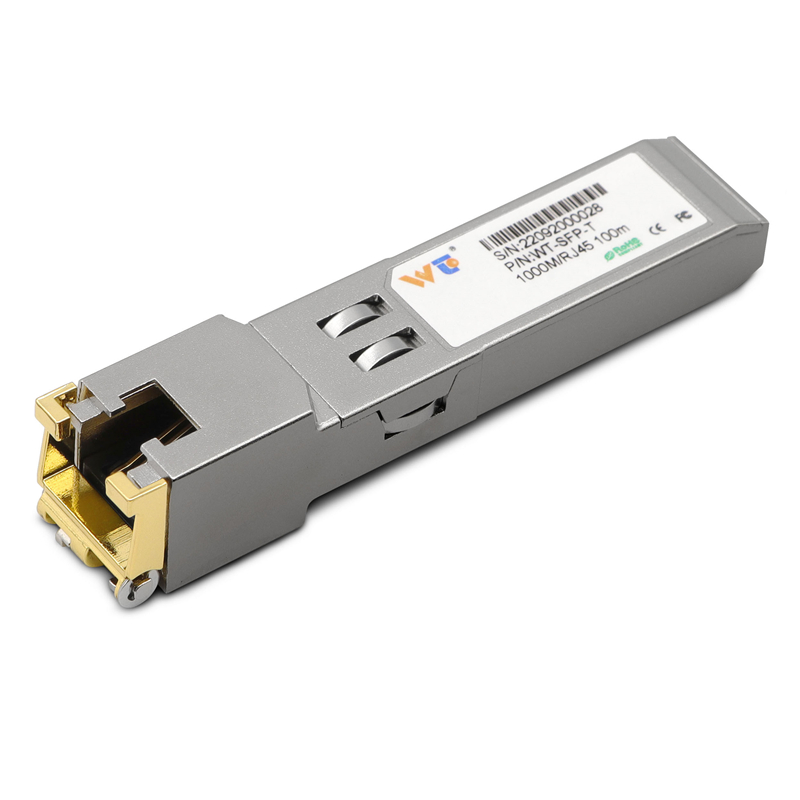
Copper transceivers keep value for rack-to-rack or switch-to-server runs under 30 meters. The legacy workhorse is the 1000BASE-T SFP module—cheap, simple, and often hot-swappable. A well-chosen 1000base t copper sfp transceiver can bridge older switches while you stage an 800G fiber rollout. Copper saves on fiber re-cabling costs and can be a practical stopgap during phased upgrades.
Operational Production Teardown: What Teams Actually Do
Field deployments usually follow the same pattern: pilot trunks with optical 800G links, keep copper for leaf-to-server paths, then iterate. On day one you might test QSFP-DD optics for spine links and deploy sfp to rj45 transceiver units to maintain legacy server ports. Track insertion loss, switch compatibility, and thermal headroom in real measurements. Vendors list power draw; your rack-level averages matter more. Watch out for common mistakes—overlooking cable management or assuming every port supports a new form factor.
Common Upgrade Mistakes — Short and Real
Teams often bite off too much: buying max-density optics before validating cooling, or failing to confirm breakout mapping between vendors. Another trap is underestimating latency changes in conversion gear—small but measurable for distributed storage clusters. Take it slow and instrument each step—your monitoring will flag bad choices early. —Quick aside: skilled operators always keep a copper fallback for that unexpected compatibility hiccup.
Quick Comparative Checklist
– Optical (QSFP-DD/OSFP): best for long-haul trunks, higher cost, higher power, better future-proofing.
– Copper (SFP 1000BASE-T): best for short runs, low cost, minimal plant work, limited to lower bandwidth per lane.
– Breakout strategy: use high-density optics for aggregate spine links and copper for leaf-level patching during transition.
Advisory: Three Golden Rules for Choosing Modules
1) Measure thermal and power headroom first—density without cooling kills performance. 2) Match reach and lane counts to traffic patterns—don’t buy 800G optics where 100G aggregation suffices. 3) Validate vendor interoperability in a lab before bulk buys; small incompatibilities multiply in production.
Done right, this approach keeps budgets sane and timelines real—WINTOP brings practical transceivers and fallback options into that workflow, making phased 800G moves less painful. WINTOP.