

The quiet work of protection schemes often goes unnoticed until a storm hits. In utility and field-deployable systems alike, choices about surge protection and over-current coordination determine whether a site weathers an event or does not. I find it useful to compare two paths: traditional layered protection and integrated inverter-battery designs—each with different consequences for reliability, maintenance, and cost. For a practical touchstone, consider a Portable Solar Power Station that bundles inverter, battery, and protective electronics into one unit: the contrast becomes clear against piecemeal arrays and separate protection devices. The reflection becomes urgent when you recall real outage programs such as California’s Public Safety Power Shutoffs, where resilience choices had immediate human impact.
Where conventional protection falls short
Traditional installations rely on discrete components: surge arresters, external circuit breakers, and inverter internal protections. That worked when scales were smaller and faults easier to isolate. But utility-scale and distributed systems introduce coordination challenges. Over-current protection must be selective — trip the right device at the right time — while surge protection needs the speed and energy rating to absorb transient spikes from lightning or switching events. When protection is added as an afterthought, you get mismatched response times, thermal stress on the inverter, and longer downtime during faults. The result is predictable: higher maintenance and operational uncertainty.
How integrated designs change the calculus
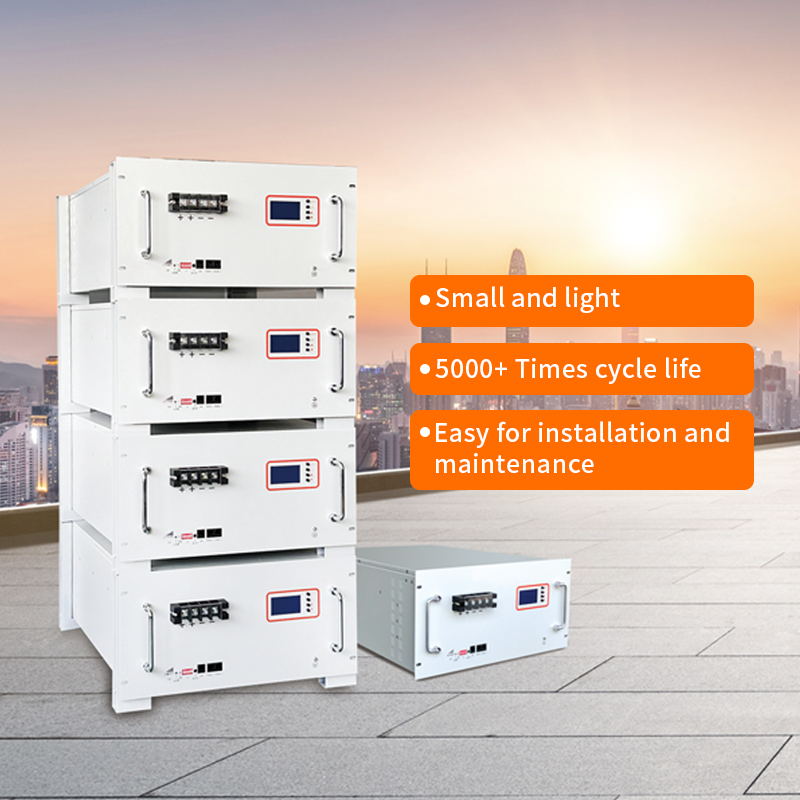
Integrated systems combine the inverter, LiFePO4 battery chemistry, and a battery management system (BMS) with coordinated protection logic. This lets protection be designed as part of the control strategy rather than bolted on. In practice, an embedded BMS and intelligent inverter firmware can sequence disconnection, throttle MPPT input, and isolate faulty strings faster than external breakers alone. Those improvements reduce stress on power electronics and limit the energy a surge delivers to sensitive components. The effect is tangible in field units used for disaster response—lifepo4 portable solar power station solutions proved simpler to deploy and manage during prolonged outages because their protection and charging logic were pre-integrated.
Comparative checklist: trade-offs that matter
When weighing conventional vs integrated approaches, these concrete factors make the difference:
- Response time: integrated protection often triggers faster than cascaded external devices.
- Coordination: firmware-based logic can coordinate over-current protection with grid islanding and inverter controls.
- Serviceability: discrete systems allow component-level swaps; integrated units simplify replacement but may require factory-level diagnostics.
- Energy absorption rating: external surge arresters can carry higher nominal surge currents; integrated modules trade some extreme capacity for compactness and predictability.
- Thermal management: integrated thermal monitoring protects the inverter and battery from cascading failures.
Real-world application and lessons learned
Field experience from extended outages shows clear patterns. During public-safety shutoffs, crews prioritized quick-deploy systems with stable chemistry—LiFePO4—because they tolerate deeper cycles and shorter charge windows. Sites using integrated inverter-battery stations recovered more rapidly; technicians swapped a single enclosure rather than coordinating multiple vendors for arresters, breakers, and inverter replacements. This reduced handoffs and shortened downtime. —There’s a human cost to complexity; simpler integration often means fewer mistakes on site and less confusion under pressure.
Advisory: three golden rules for choosing protection strategies
1) Prioritize coordinated response time: select systems where the inverter’s protection logic and external breakers are tuned to avoid nuisance trips while ensuring safety. Fast selective tripping reduces equipment stress and outage scope.
2) Match surge capacity to local risk: in high‑lightning or industrial switching zones, favor higher-energy surge arresters alongside integrated protection; in lower-risk deployments, well-designed embedded protection and a robust BMS can suffice.
3) Value maintainability and diagnostics: a clean fault log and remote telemetry from the inverter and BMS speeds repair. If a solution simplifies field workflows without compromising protection, it will save time and money in the long run.
Choosing protection is technical but it’s also practical: you want systems that behave predictably when stakes are high. For many field and utility situations, the integrated approach offers a balanced answer—robust over-current protection, coordinated surge handling, and streamlined service. gsopower.