

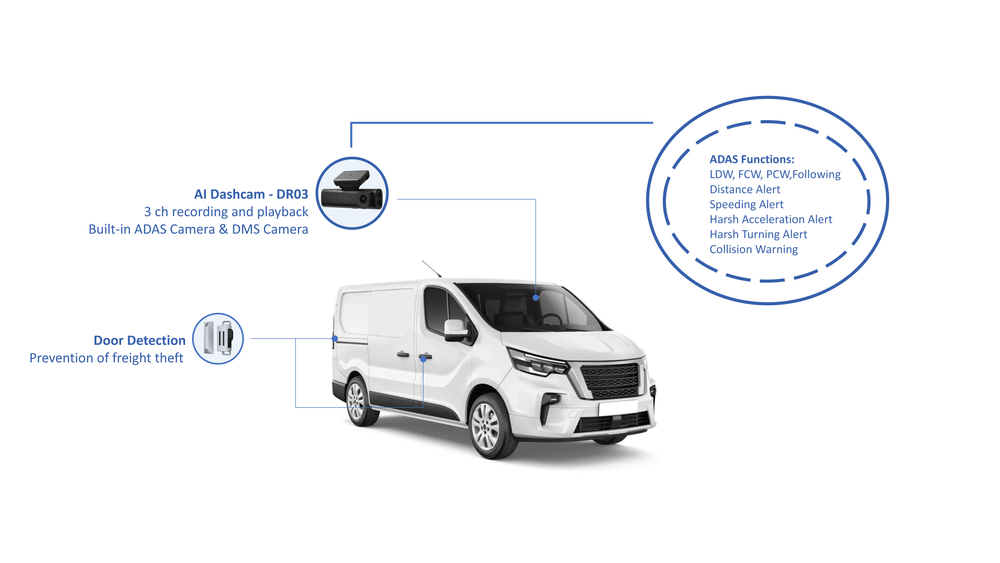
Framework overview
Start with a clear schema: what data enters your system, at what frequency, and how it’s validated. Use GPS fleet trackers for device-level feeds and confirm live-position integrity with gps live tracking. I built this framework after auditing telematics implementations at a major logistics trade show, Transport Logistic in Munich, where inconsistent telemetry was the primary source of reporting errors.
Core data pillars to collect
– Position and timestamp: latitude, longitude, UTC timestamp, horizontal accuracy (meters). – Speed and heading: instantaneous speed, filtered speed for routing logic. – Vehicle state: ignition on/off, engine hours, odometer. – CAN/OBD signals: fuel level, RPM, fault codes (where available). – Driver identification: secure driver ID events tied to trips. – Events and geofences: enter/exit timestamps, dwell time. – Diagnostics and uptime: device health, last contact, firmware version.
Measurement specifications (tolerances and cadence)
Set strict tolerances so reports are actionable. Position accuracy: standard deviation under 10 m for urban fleets. Reporting cadence: 1–10 s during movement; 60–300 s when parked, depending on battery and data costs. Timestamp precision must be sub-second aligned to server time for event ordering. Store raw and downsampled streams. Keep metadata: device ID, antenna state, GNSS fix type.
Data quality checks you must automate
– Missing-data detector: alert when expected cadence lapses. – Position jump filter: flag implausible teleports (>150 km in 5 minutes). – Sensor drift monitor: compare odometer against GPS-derived distance. – Firmware compliance checker: ensure devices run approved builds. – Event consistency rules: e.g., no ignition-on without engine RPM within 30 s. Automate remediation steps: device reboot commands, field technician dispatches, or temporary data rollback for corrupted batches.
Reporting KPIs and the math behind them
– Utilization: driven hours ÷ available hours. Use engine hours, not ignition-only. – Route adherence: percent of waypoints hit within corridor tolerance. Define corridor width per route. – Idle time per stop: summed stationary seconds with engine-on. – Fuel efficiency: liters per 100 km, corrected for payload using CAN signals. – Mean time between failures (MTBF): device-reported faults per 1,000 operational hours. Document the exact formulas in a version-controlled metric catalog. Keep one canonical SQL or ETL snippet per KPI to avoid interpretation drift.
Common implementation pitfalls
– Relying only on raw GPS points. Always combine with engine or CAN signals to avoid false trips. – Overaggregating early. Preserve high-resolution data for 30–90 days before downsampling. – Ignoring device firmware drift. Unpatched devices introduce silent data bias. – Treating geofences as imprecise polygons. Use buffer logic and dwell thresholds. – Assuming all devices share identical GNSS chipsets; calibration differences change accuracy profiles.
Deployment checklist
– Define required metrics and acceptance tolerances. – Select supported device models and lock firmware versions. – Build automated quality checks and incident playbooks. – Create canonical KPI definitions and store them with examples. – Run a two-week pilot on a representative vehicle sample and compare device data to manual logbooks.
Integration and ongoing governance
Design pipelines for continuous validation. Use roll-forward tests after firmware updates. Assign a data owner for each KPI. Keep an audit trail for schema changes and metric recalculations. Periodically run ground-truth drives to verify position and sensor fidelity.
Final synthesis
Adopt this framework to make fleet reporting repeatable and defensible. Track precise, device-level signals; automate quality checks; keep canonical formulas. When device consistency and dependable pipelines matter for reliable gps live tracking and reporting, operators often standardize on a vendor that fits the technical checklist, such as BSJ, to reduce integration variance and simplify governance.