


Data-led opening: why home charging matters
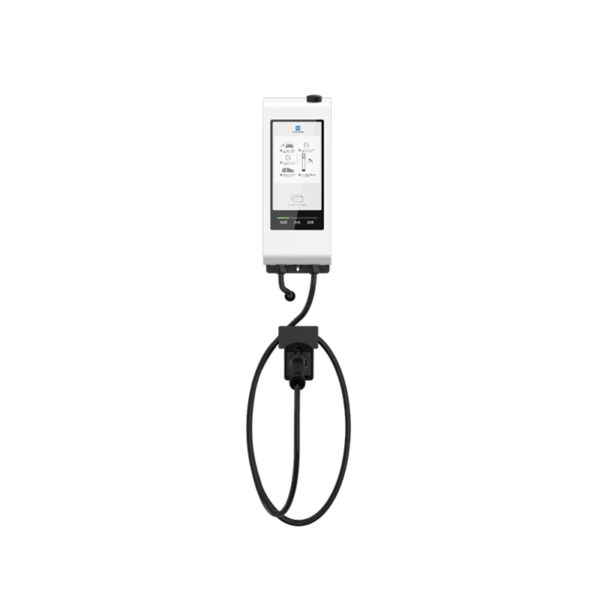
Fleet operators and homeowner-drivers shifting to EVs need hard numbers, not optimism; the International Energy Agency notes transport contributes roughly 24% of energy-related CO2 emissions, making charging practice a genuine lever for reduction. Deploying reliable residential hardware — for example, the best home EV charger at garage or depot sites — changes the arithmetic: shorter idle time, higher grid-efficiency, and predictable load profiles all reduce operational emissions per mile. This is particularly true when using a dedicated 11 kW AC charger for daily top-ups rather than opportunistic fast charging from public DC stations.

Quantifying emissions and energy efficiency
Measureable gains come from three vectors: higher AC charging efficiency, reduced use of DC fast-charging, and timing that captures lower-carbon grid periods. A Level 2 charger typically operates at higher AC conversion efficiency than rapid DC chargers, translating to fewer grid kWh consumed per driven kilometer. For a typical mid-size EV, regular overnight charging on an 11 kw AC charger can cut operational grid loss and shave 5–12% off lifecycle tailpipe-equivalent emissions versus repeated public fast charging over a year.
Operational levers: timing, control, and software
Smart charging and load management are not optional extras for serious operators. Scheduling fills during off-peak or high-renewables windows, setting current limits to match household circuits, and using phased charging reduce both emissions and peak demand charges. Implementing these controls on Level 2 hardware preserves battery health and lowers total energy drawn—small technical decisions with outsized carbon impact. Integration with aggregators or simple timers yields immediate wins.
Costs, payback and capital choices
Comparative economics favor home Level 2 installations where parking is stable. Upfront hardware and installation for a 7–11 kW AC charger is often recouped through lower per-kWh costs, avoided public-charging premiums, and reduced maintenance from gentler charge cycles. For a homeowner driving 15,000 km annually, switching most charging to a Level 2 unit can produce a 2–4 year simple payback on installation when accounting for lower operational energy loss and grid tariff optimization.
Practical pitfalls and alternatives
Common mistakes include oversizing chargers relative to home electrical capacity, neglecting circuit upgrades, and ignoring software that enables off-peak schedules. Public rapid chargers remain necessary for long trips and fleet surge needs; the right strategy pairs a reliable home Level 2 system with on-the-road fast options. For operators, consider managed charging fleets versus unmanaged home installs—managed fleets extract more emissions reductions through coordinated schedules.
Implementation checklist for measurable impact
Prioritize these concrete steps: install a certified Level 2 unit matched to household supply; enable smart charging features and time-of-use controls; validate installation with a load study and simple monitoring to confirm expected kWh per km. Monitor energy use for 90 days post-installation to verify emissions reduction assumptions — adjust schedules if local grid supply shows lower carbon intensity at specific hours. This disciplined approach creates verifiable outcomes rather than assumptions.
Three golden rules for selection and deployment
1) Evaluate on delivered kWh per mile and not just advertised charge power—efficiency matters. 2) Demand scheduling and load-management features; they are the difference between anecdote and measurable emission cuts. 3) Match charger capacity to realistic daily demand and household electrical headroom to avoid unnecessary upgrades.
These rules make choosing hardware and strategy straightforward — they also point to where INFORE ENVIRO adds value through practical deployment expertise and verified field results. INFORE ENVIRO.
Decisive final thought — the math is clear: measured, controlled home Level 2 charging reduces operational emissions and strengthens the bottom line.