

Intro: A Night, A Drop, A Split-Second Question
Picture a packed room in Brooklyn, bass rolling, then the drop hits—and the beams lag a beat. Stage Laser Lights should snap with the snare, not wander. Data shows humans notice desync around 80–100 ms, sometimes less under bright cues. So here’s the real question: why do shows still drift when the gear is “pro-grade” and the timeline is tight (no excuses in this city, fam)? The answer isn’t just bad settings. It’s the control chain, the transport, the power envelope, and the human workflow—all colliding at showtime. Let’s compare what most rigs do against what they should do, side by side, and see why timing slips. Next up, we drill into what actually breaks when you push the system.

Under the Hood: Why Traditional Control Chains Break Sync
What’s going wrong?
Here’s the hard truth: old-school DMX-only loops aren’t built for precise laser timing. They move channel values well, but not time. With programmable stage lights, you need more than faders—you need deterministic clocks, clean profiles, and predictable latency. DMX512 packets stack up, nodes hiccup, and cheap power converters inject noise. Galvo scanners don’t like jitter. ILDA frame rate matters. Your latency budget vanishes before the first chorus. Look, it’s simpler than you think: if timing has no master, everything chases nothing—funny how that works, right?
Hidden pain point number two: mixed ecosystems. Console firmware, media server, laser DAC, and network switches all speak slightly different timing rules. Without a shared timecode, tiny delays become visible streaks. Beam divergence masks some sins, but not all. Edge computing nodes help, yet if they aren’t locked to the same clock, fades smear and aerials wobble. Another trap? Safety interlocks and thermal throttling kick in at the worst moments, changing response curves mid-show. The result is a “pretty” rig that never snaps. It cruises, it doesn’t punch. And that’s the gap the modern toolset must close.
Comparative Shift: From “Good Enough” Control to Clock-True Systems
What’s Next
To move past drift, swap “best-effort control” for clock-first design. That means transport with time awareness: PTP or SMPTE LTC/MTC distributed to all nodes, Art-Net or sACN for channels, and a laser DAC that phase-locks its output to the same source. Then tie your laser lights for stage to the music via embedded timecode in the media server. The principle is clean: one clock, many listeners, zero guessing. When the console fires a cue, the lights don’t react “now”—they react at timestamp T, together. Add predictive buffering so scanners maintain ILDA geometry at speed, and PWM dimming stays linear even under load.
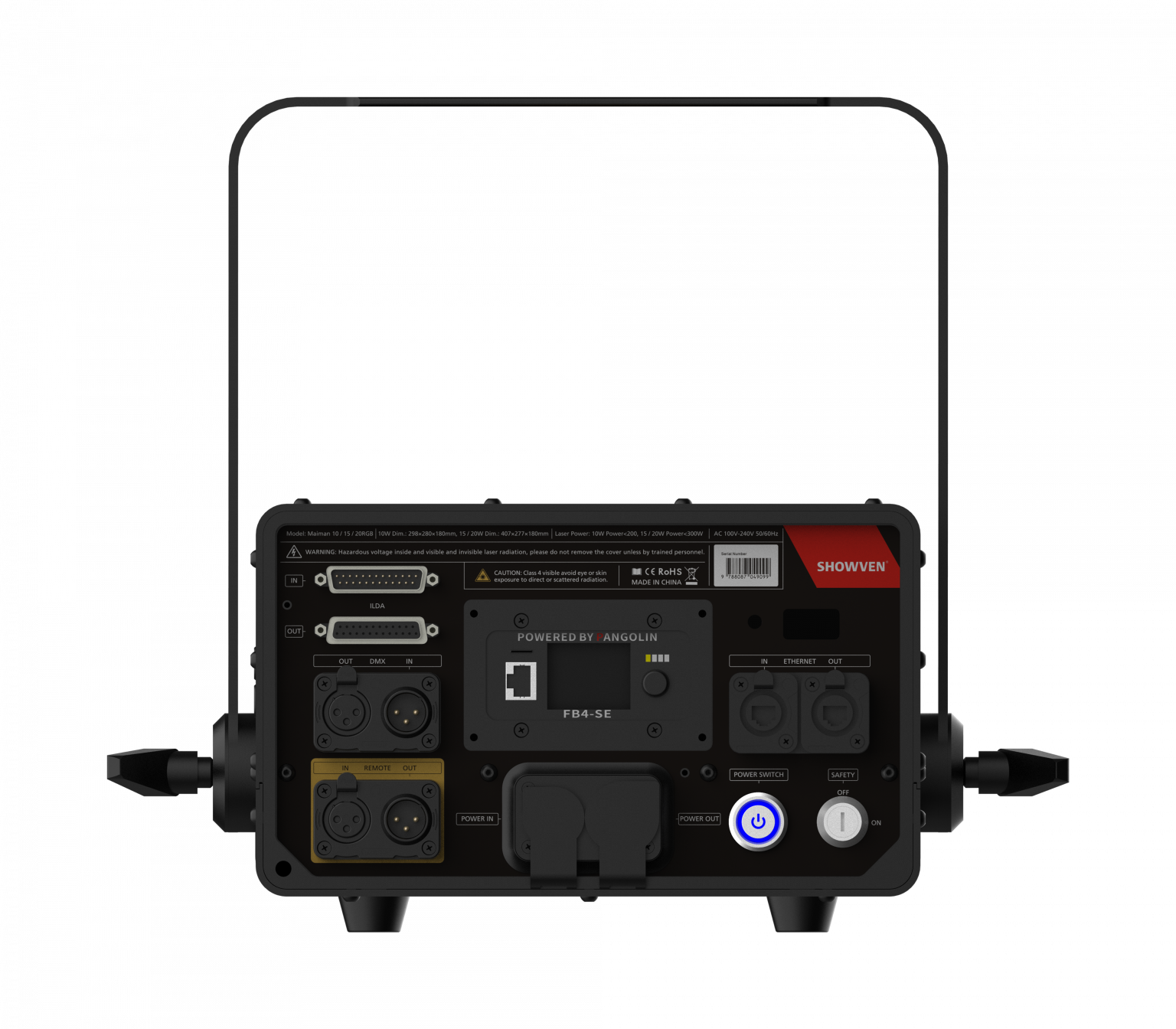
In practice, this looks like a small network spine—managed switches, QoS for time packets, and firmware that reports end-to-end delay. You compare legacy DMX-only rigs to this setup and the difference is obvious. Old rigs drift when CPU spikes or cables get sketchy; the new stack holds because sync isn’t a suggestion, it’s a contract. Thermal events are pre-modeled, power rails are monitored, and the system stays within a narrow tolerance band. You feel it in the room. Hits line up. Air looks sharp. And when something does sag—go figure—the logs tell you why.
How to Choose: Three Metrics That Matter
Before you build or upgrade, measure what counts, not just what’s shiny. First, sync accuracy: demand a full-path report in milliseconds from cue to photon, including network hops and DAC processing; aim for sub-50 ms total under load. Second, scanner performance: verify galvo scan rate and ILDA frame integrity at show speeds, plus thermal stability and IP rating (IP65 housings keep results steady). Third, power and safety: confirm regulated rails, clean power converters, and documented safety interlock behavior so response curves don’t change mid-scene. Nail these, and your rig stops drifting and starts hitting. For deeper specs and gear alignment, check the ecosystem offered by Showven Laser.