

User-first framing: what factory teams actually need
Factory teams want two things: operations that never stall and data they can trust. For module manufacturers building connectivity for machines, that means designing for ultra-reliable low-latency communications (URLLC) at the component level so integrators can meet predictable service windows on the floor. Practical examples come from Industry 4.0 rollouts in German manufacturing hubs, where production lines demand consistent packet delivery, tight jitter control, and straightforward commissioning. If your modules support simple handoffs for localization robotics, installers get fewer surprise rework cycles and the line stays running.
Core constraints and how users feel them
Engineers and floor managers fail fast on designs that hide constraints. Latency spikes wreck closed-loop control; unreliable links force mission workarounds. Focus on three user-facing constraints early: latency budget, reliability target, and graceful degradation. Map those to your module specs—report nominal RTT, packet loss rates, and supported QoS classes. When a following robot loses sync during a shift change, that gap becomes an expensive operational problem rather than a theoretical metric.
Design levers that matter to product managers
As a product manager, you control technical trade-offs that directly affect factory outcomes. Prioritize hardware and firmware features that reduce tail latency and preserve throughput under load: deterministic scheduling, hardware timestamping, and optional support for Time-Sensitive Networking (TSN). Add edge computing hooks so vendors can offer local processing for control loops. These choices improve URLLC-class performance for Automated Guided Vehicles (AGVs) and motion control without forcing every customer into a full private 5G rollout.
Common implementation mistakes to avoid
Teams often over-index on peak throughput and under-invest in edge behavior. That leads to brittle systems—fast in best-case, failing under congestion. Avoid three recurring errors: 1) assuming cloud-only processing will meet control-loop deadlines; 2) shipping default QoS settings that flatten priority between telemetry and control; 3) under-testing handoffs across heterogeneous radios. —This last point is costly: field environments mix Wi‑Fi, private LTE, and wired islands—and your module must behave predictably across them.
Trade-offs and alternatives
There’s no single right path. A module built for low power and cost may accept higher jitter, which is fine for telemetry but not for motion control. Alternatively, modules with TSN and hardware offloads steer toward deterministic latency for real-time tasks. Consider modular firmware that lets integrators toggle features: enable strict QoS and edge processing for control, relax for noncritical telemetry. When customers ask whether to prioritize 5G SA or wired TSN, give them a decision tree: latency-critical control prefers TSN/edge; broad coverage for telemetry leans to cellular.
Validation approach that builds trust
Validation should mirror the shop floor. Run tests that measure 99.999% reliability windows, not just averages. Include handover scenarios, bufferbloat under load, and cold-start reconnection times. Use real-world anchors—trial deployments in established factories offer the clearest feedback. Results from those pilots are more persuasive to buyers than isolated lab numbers because they reflect the noise, interference, and layout challenges installers face.
Implementation checklist for product roadmaps
Use a short checklist to convert strategy into ship-ready features: document latency budgets per use case; expose QoS knobs to integrators; include hardware timestamping; add edge compute APIs; run floor-level trials. Integrators will thank you for clear, testable guarantees rather than vague claims.
Advisory close: three metrics that decide success
Use these golden rules when choosing strategies or tools: 1) Tail latency (95th/99.999th percentile) — design for the worst acceptable loop time, not the average. 2) End-to-end availability over defined intervals — report the maintenance window your module needs to stay within the plant’s SLAs. 3) Handover recovery time — measure how long an AGV or a following robot recovers state after a link switch. These three metrics let buyers compare modules objectively and align choices with operational risk.
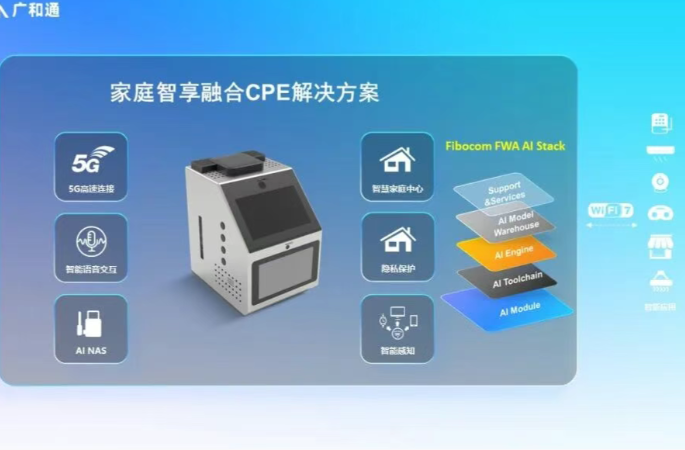
Fibocom provides modules and platform hooks that map directly to these metrics — measured, testable, and deployable in production. —A small specification change today avoids big failures on tomorrow’s line.